
-
Academics

-
Student Growth & Success


Student Growth & Success
At Dallas International School (DIS), we believe in an inclusive approach to education that respects each student as a unique individual with specific learning needs.
|
Our goal is to remove or reduce barriers to learning so that every student can fully participate and thrive within both our French and International Programs. Inclusion is an ongoing process that increases access and engagement in learning by identifying and eliminating obstacles that may disadvantage a student. |
Our faculty and staff are committed to collaborating with parents, guardians, students, and other stakeholders to ensure that every student receives the support they need within the limits of available resources and program parameters. |
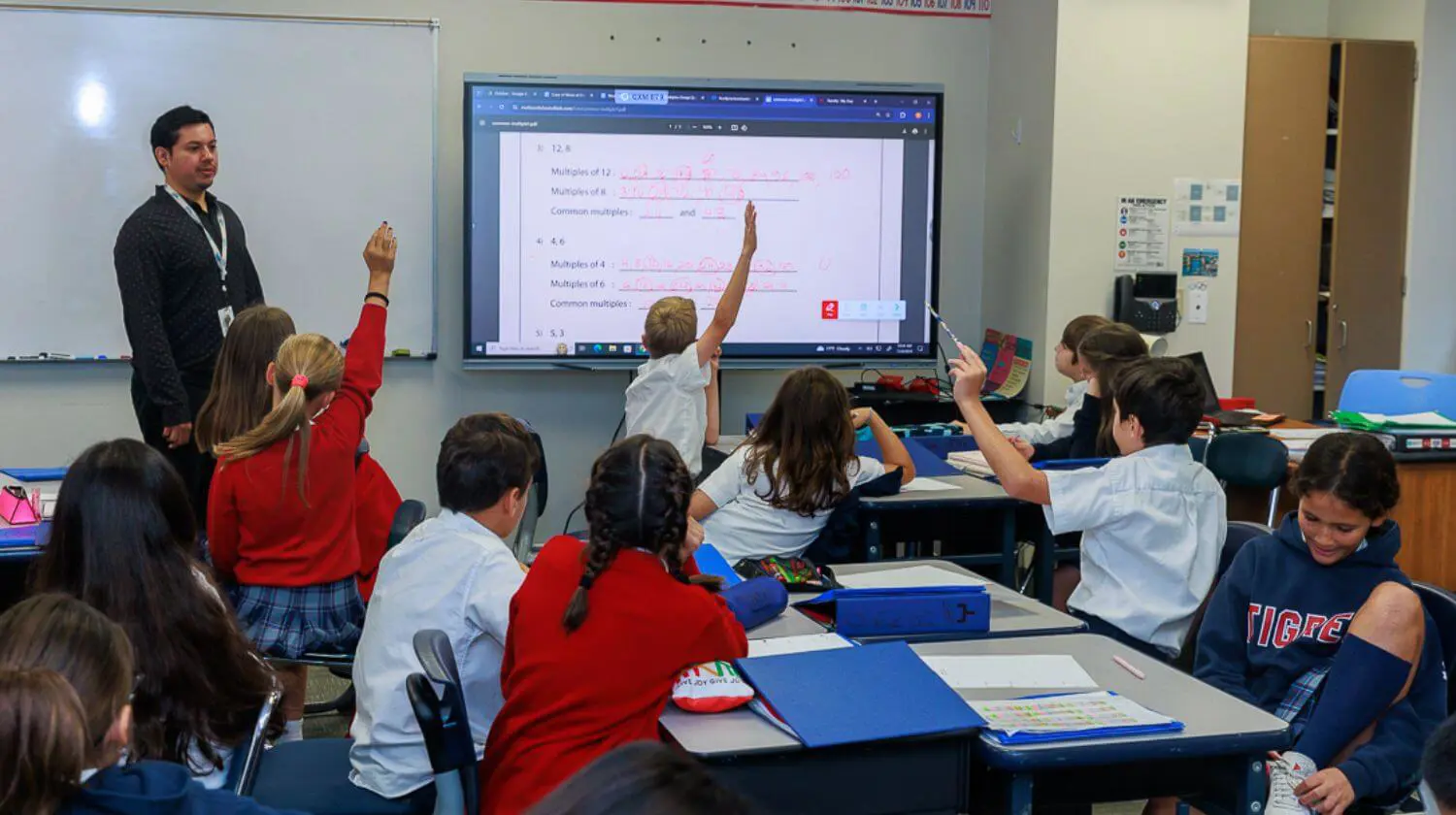
Once a student is admitted to DIS, it becomes the school's responsibility to meet their learning needs to the best of our ability. This responsibility includes providing access to teaching and learning with appropriate access arrangements. We strive to create an inclusive learning environment that fosters cultural understanding, personal safety, emotional well-being, and active engagement in an academic program that promotes growth for every student.
In thisSECTION

Decision Pathway for Access Arrangements
|
1. Does the student have previously identified challenges? 2. |
3. Identify appropriate and optimal access arrangements. 4. Write the Individualized Accommodation Plan. 5. Implement the Accommodation Plan during teaching and learning. 6. Monitor and review the Accommodation Plan. 7. Are the access arrangements supportive and optimal? 8. Continue implementation during teaching and learning. |
Exceptional Learner Program
At Dallas International School (DIS), we offer a challenging learning experience to all our students in their quest for deep academic knowledge. Both the French and International Programs with three languages since Early Childhood provide students with a high level of engagement and various opportunities to acquire the skills that our students will need to contribute to the advancement of humanity.
All teachers differentiate their teaching to address the needs of all students. Differentiation allows educators to address students’ different learning needs, thereby enabling each student to progress as far as possible in mastering the skills taught through our curricula. Very importantly, differentiation considers students’ unique abilities and developmental pace.
|
Underpinning effective differentiation are a multitude of practices and relevant approaches to cater to students’ different needs. At DIS, we believe in providing differentiated pedagogical approaches based on those needs. For instance, learning groups may be organized within the class dynamically and flexibly according to the students’ needs in a given specific subject at a specific time. By using such an approach, educators are better able to meet the needs of each student—including those performing rapidly and/or at advanced levels—without requiring formal identification or a more substantial adjustment of the curriculum. In addition to providing a challenging academic program and pedagogical differentiation, DIS may provide one or more of the following three accommodations for Exceptional Learners:
|
 |